syntropic farming at la loma viva
At La Loma Viva, we are adapting Ernst Götsch’s method of syntropic farming to a Mediterranean, semi-arid climate.
We first discovered Ernst’s work through the documentary Life in Syntropy, presented at COP21 in Paris. He visited La Loma Viva in 2016 and returned each year until 2019, working alongside us to adapt this method to the species and conditions of our climate..
In Brazil, Ernst demonstrated how degraded land can be restored to abundant, edible forests. His approach works with natural processes to create diverse agro-ecosystems, that produce food while regenerating soil and supporting life.
La Loma Viva has been a pioneer in exploring syntropic farming in a Mediterranean climate. It has transformed how we care for our land, helping us grow resilient, productive systems with fewer external inputs. Despite drought, high temperatures and water scarcity, our soils have improved and our water use has decreased. We are growing food and other useful crops in a dry, degraded landscape while creating habitat for a rich variety of life.
We are also founding members of the TERRA Network, an international community of syntropic farming practitioners who have been sharing their knowledge to evolve the practice and develop high-quality education. Together, we draw on years of expereince and collaboration to help others to develop their skills and to create opportunities for continued learning through internships, consultancy and mentoring.

syntropic farming explained
What is Syntropy?
Many of us are familiar with “entropy”—the tendency for energy to spread out and systems to become more disordered. Living systems also show a complementary pattern: they use energy to grow, build connections and become more complex. In the context of syntropic farming, this is what we mean by syntropy.
Life on Earth embodies this process. By working with it, we can help living systems become more fertile, abundant and resilient.
What is Syntropic Farming?
Many farms and landscapes have been degraded by extractive agriculture, pushing soils and ecosystems beyond their capacity to regenerate. In these environments, we focus first on rebuilding the health of the whole system, creating the conditions for abundance and lasting productivity.
Syntropic farming is therefore a radical approach to farming—one that asks us to see the land as a living being, with its own capacity for regeneration. Our human role is to support and speed up that process with skilful planting and management.
Trees, perennial plants and annual crops are planted closely together in multiple layers to create forest-like systems. These are designed to maximise photosynthesis—the process by which plants turn sunlight into energy—and produce abundant plant material to feed and protect the soil.
Planting follows two main principles:
Space: choosing plants that occupy different layers, from ground cover to tall trees, making use of sunlight at different heights.
Time: choosing plants that grow and mature at different stages, so that some prepare the conditions for others to thrive as the system develops.
Together with selective pruning and ongoing management, this approach creates productive and beautiful ecosystems. They can provide food, animal fodder, timber, medicinal plants and much more, while improving soil health, supporting biodiversity and helping the land absorb and retain water.
In this way, we can transform degraded landscapes into thriving forested farms, with environmental, social and economic benefits.
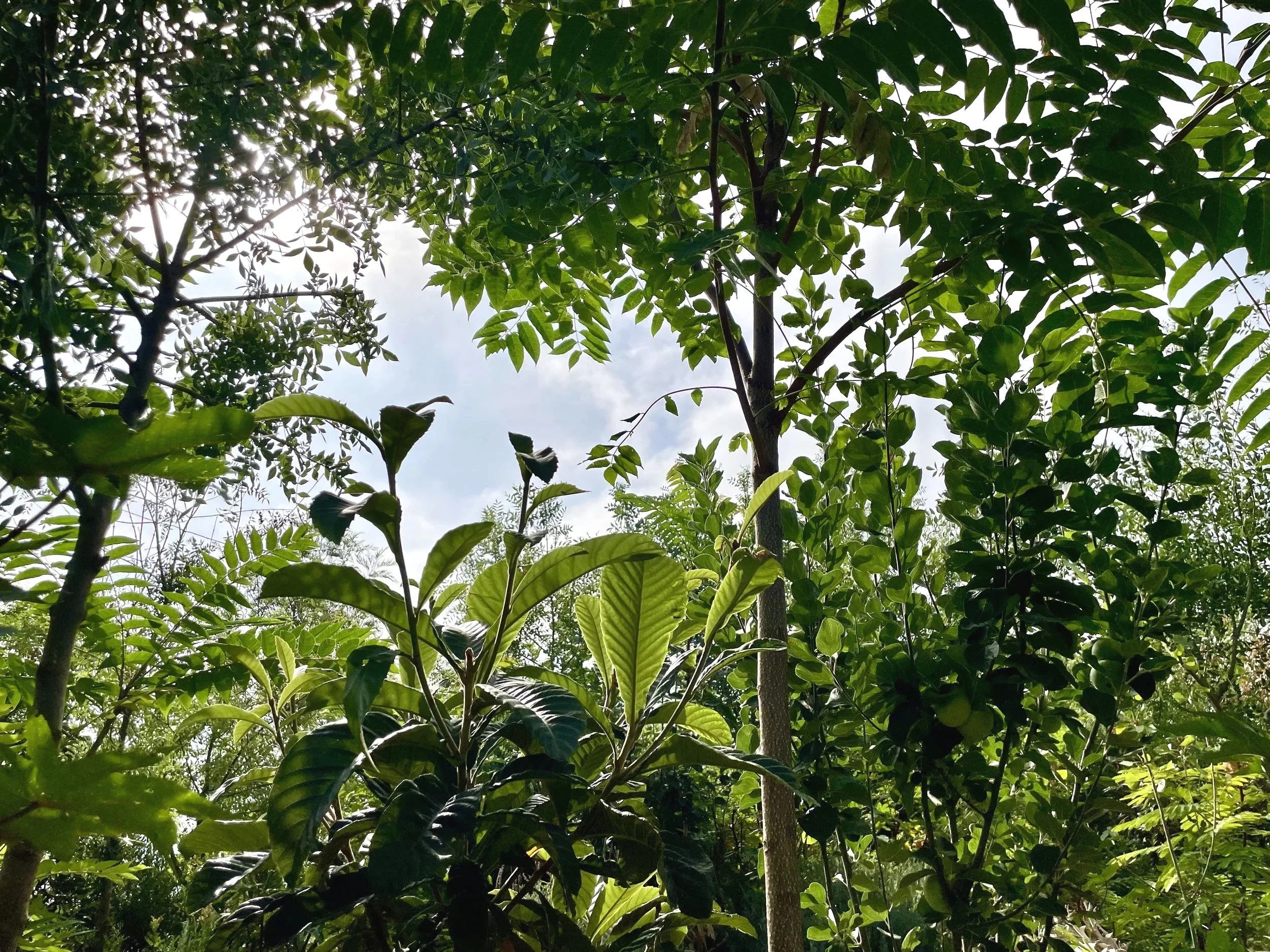
In 2017, working with Ernst Gotsch, we began one of the first ever Mediterranean syntropic agroforestry systems.
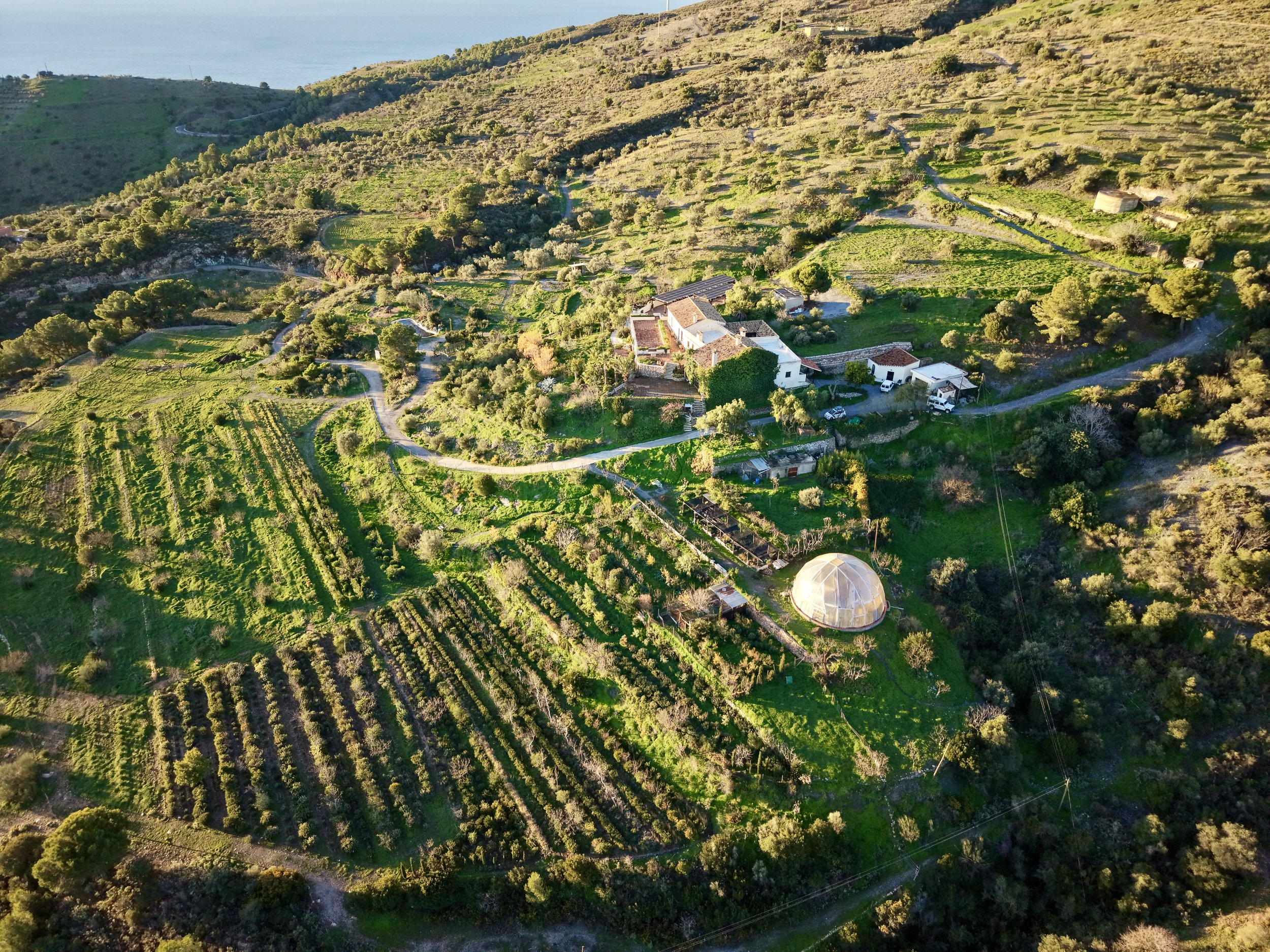

Summer 2021 - 4 years after implementation

Initial marking out and set up of the site - Feb 2017
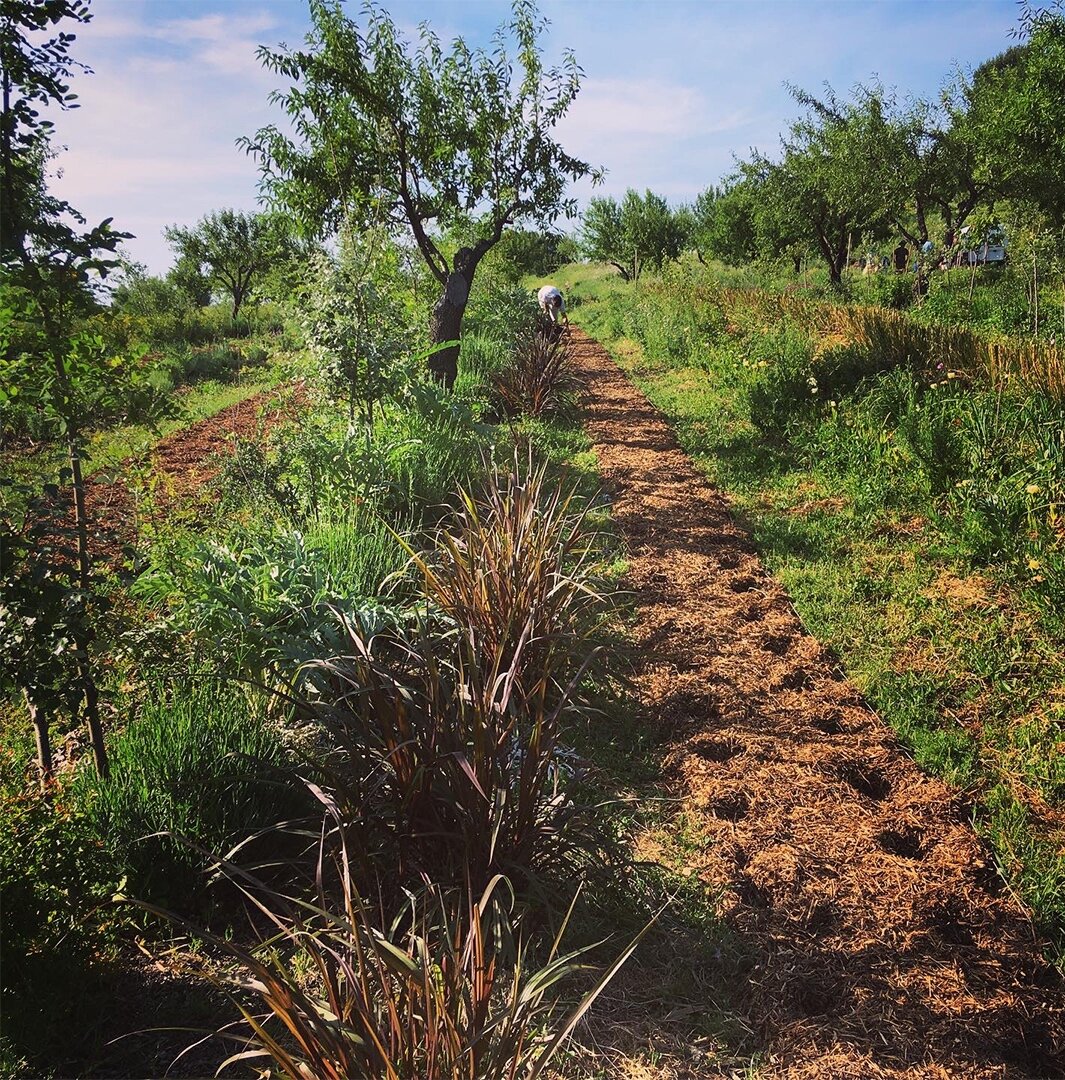
Planting interlines Spring 2020

Summer 2022 (with major drought and no irrigation)
Two months after planting up the site - May 2017

Summer 2021
-
![]()
Syntropic drought design 2026
-
![]()
Syntropic drought design area before planting 2023
-
![]()
Syntropic almond production area summer 2026
-
![]()
Syntropic almond production area before planting Oct 2024
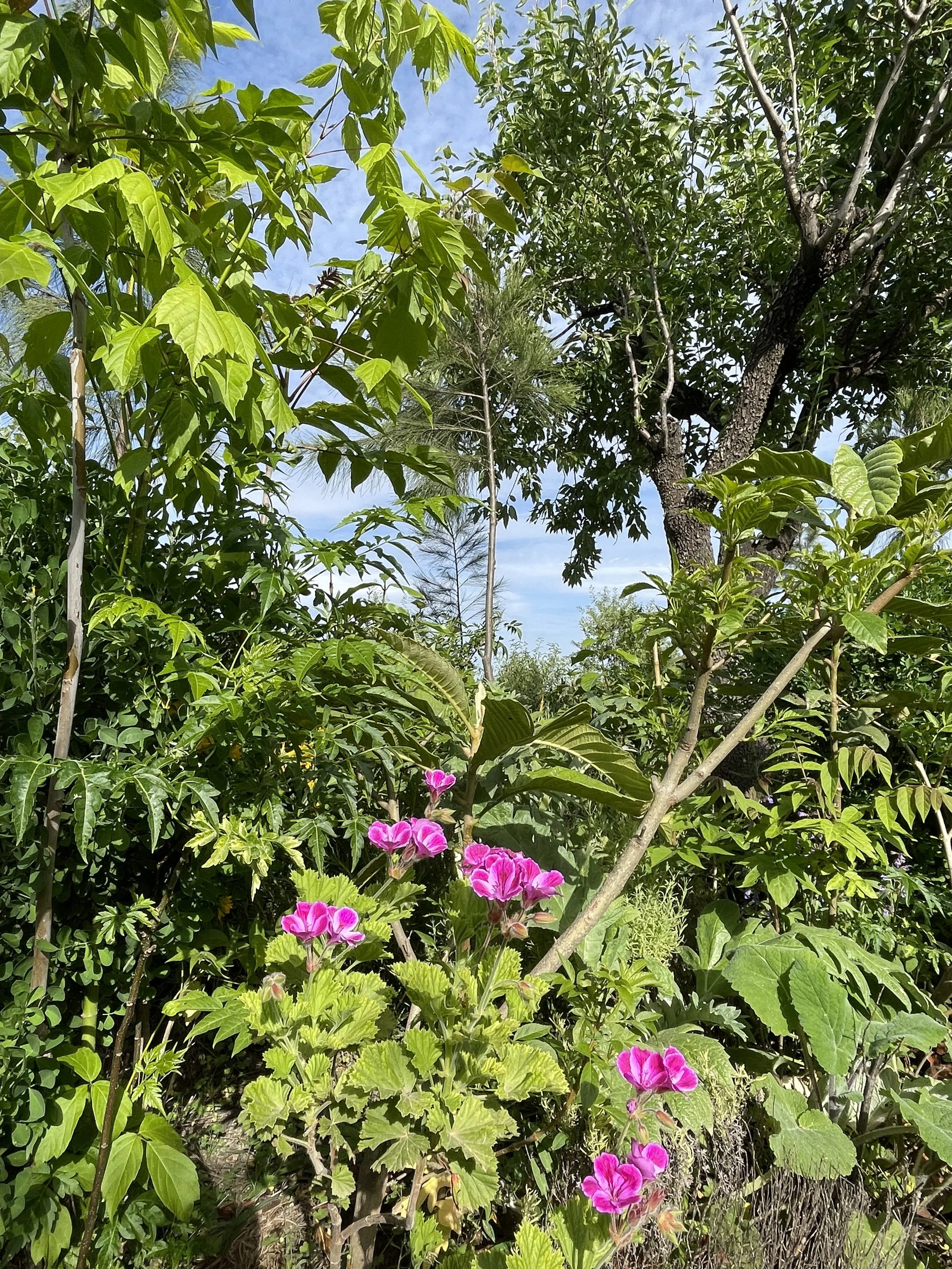
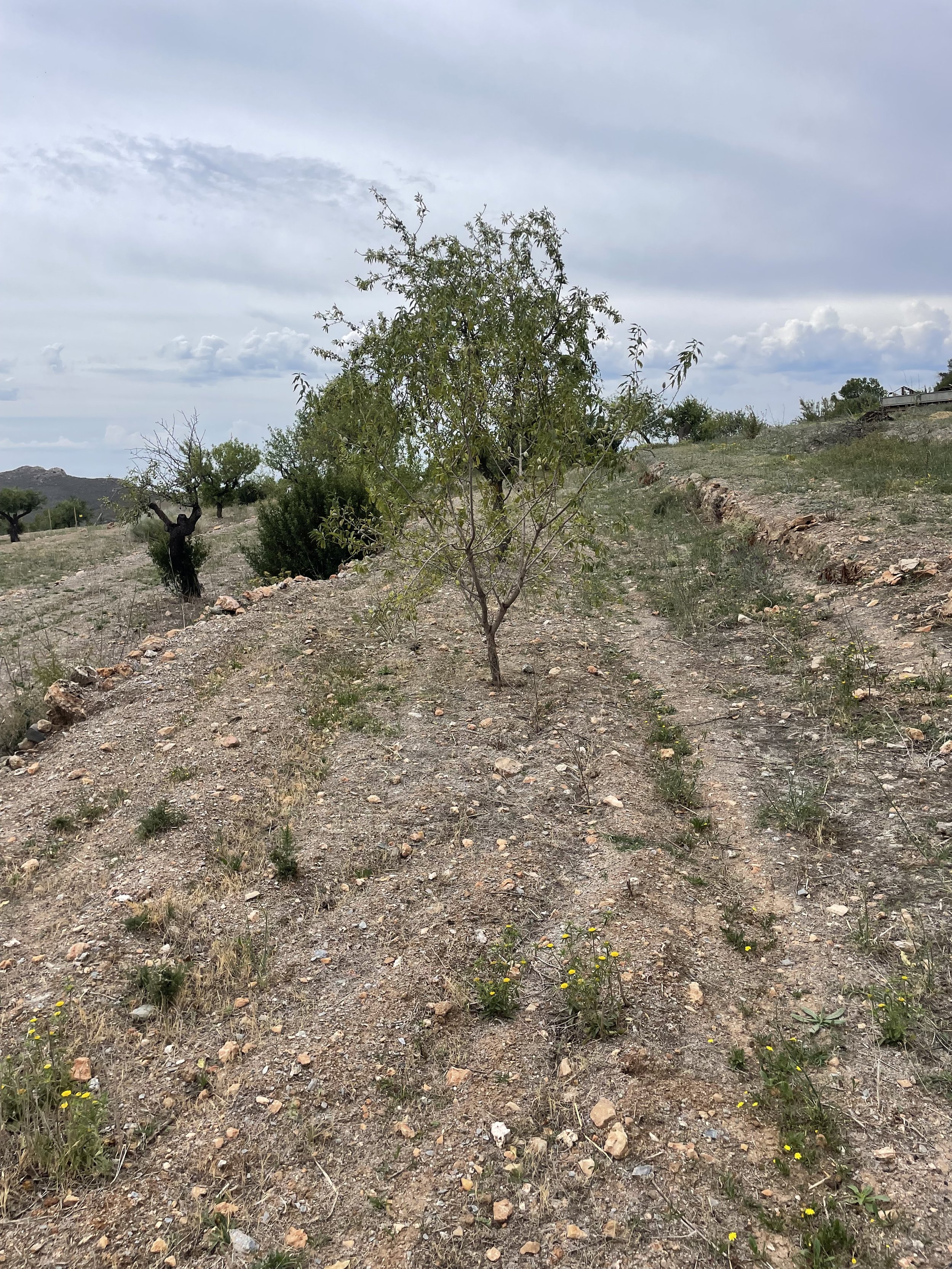
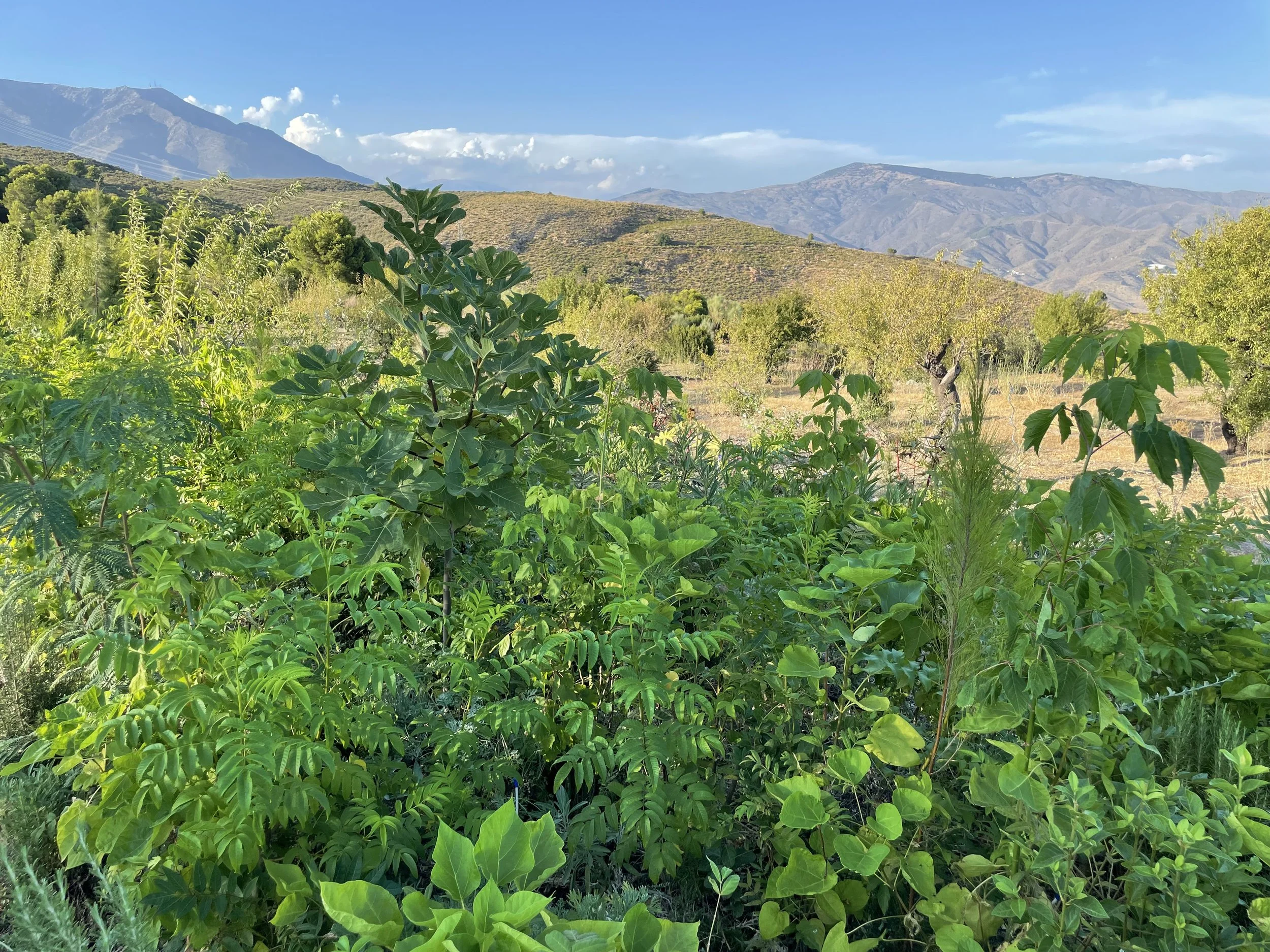
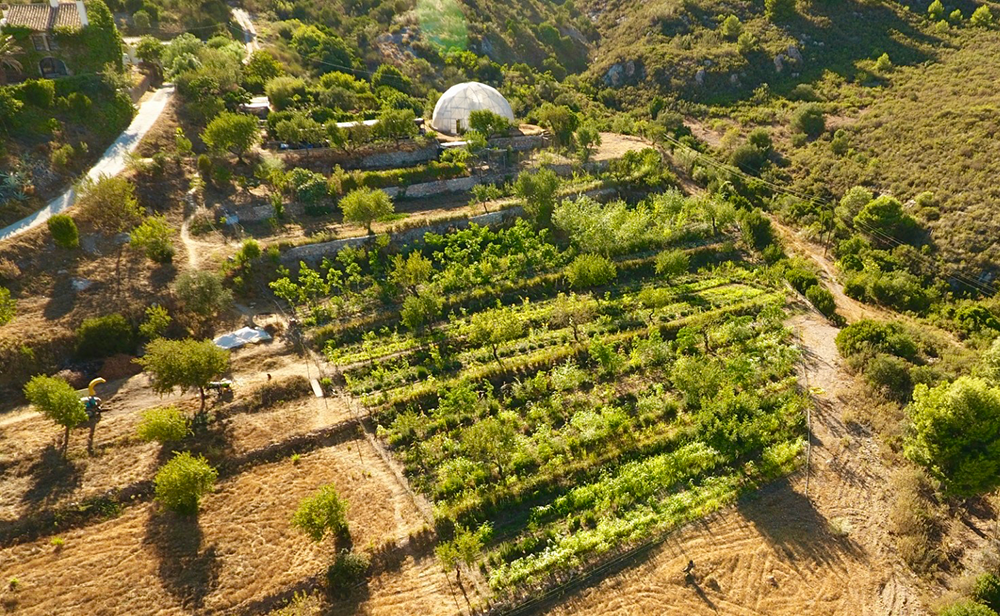
Aerial view 2019 - 2 years after implementing

Summer perspective of the syntropic area (with no irrigation for 3 years) compared with other drought affected terraces - 2022
syntropic research at la loma viva
We were privileged to be the first case study of syntropic farming to be published in a manual for the UN Food and Agriculture Organisation (FAO) in 2021. Click on the image to read the manual or on the link below to see early stage lab results from soil tests done in 2020 comparing our syntropic research area with neighbouring land.

Here is an excerpt from our case study (Copyright Food and Agriculture Organisation of the United Nations - Recarbonising Global Soils Vol4)
“Syntropic Agriculture presents an opportunity for diversified production, advantageous in reducing the risk of single crop failure and fostering a resilient agricultural system in fluctuating climate change. We have shown that the implementation of SA is able to sequester a significant amount of additional carbon. Increased photosynthesis through densely stacked, stratified plants and trees, plays an important role in reducing atmospheric carbon dioxide (CO2). SA also creates micro-climates (due to the shade and wind protection from trees) to reduce negative weather impacts. Yet probably the most important factor of SA in mitigating climate change is through the reduction of inputs – i.e. limiting fossil fuel consumption of heavy machinery, not using chemical fertilizers and reducing irrigation. With benefits such as these, agriculture can shift from being part of the climate problem to a significant part of the solution (Toensmeier, 2016). The beauty of these systems is that they are able to reduce threats and assist mitigation in an integrated and synergistic way (Duguma et al., 2014) much like natural ecosystems.
An unique aspect of SA is that it has an aesthetic value by creating beauty. Our experience is that SA provides a space for recreation, inspiration and an opportunity to observe and connect to nature, leading to improved quality of life and wellbeing.”
References: Duguma, L.A., Minang, P.A. & van Noordwijk, M. 2014. Climate Change Mitigation and Adaptation in the Land Use Sector: From Complementarity to Synergy. Environmental Management, 54: 420–432. https://doi.org/10.1007/s00267-014-0331-x
Toensmeier, E. 2016. The Carbon Farming Solution. A Global Toolkit for Regenerative Agriculture Practices for Climate Change Mitigation and Food Security. Vermont. Chelsea Green.